Picture this: a Melbourne homeowner books a 4 m³ skip for a bathroom renovation, feeling confident the job is sorted. By day two, the bin is overflowing, tiles are stacked on the driveway, and a second delivery is going to cost nearly as much as the first. It’s a familiar story. Hiring a skip bin sounds like the easiest part of any renovation or clean-up project. That changes the moment something goes wrong and you’re suddenly dealing with extra costs, permit headaches, or a truck that can’t fit through the gate.
At Twins Bins, we’ve been helping Melbourne homeowners, renovators, tradespeople, and commercial operators manage their waste removal for years. We keep seeing the same six mistakes trip people up before the bin even lands on the property. If you need to hire skip bin services in Melbourne, fixing these before you book makes the whole process genuinely straightforward.
1. Guessing on bin size instead of estimating properly
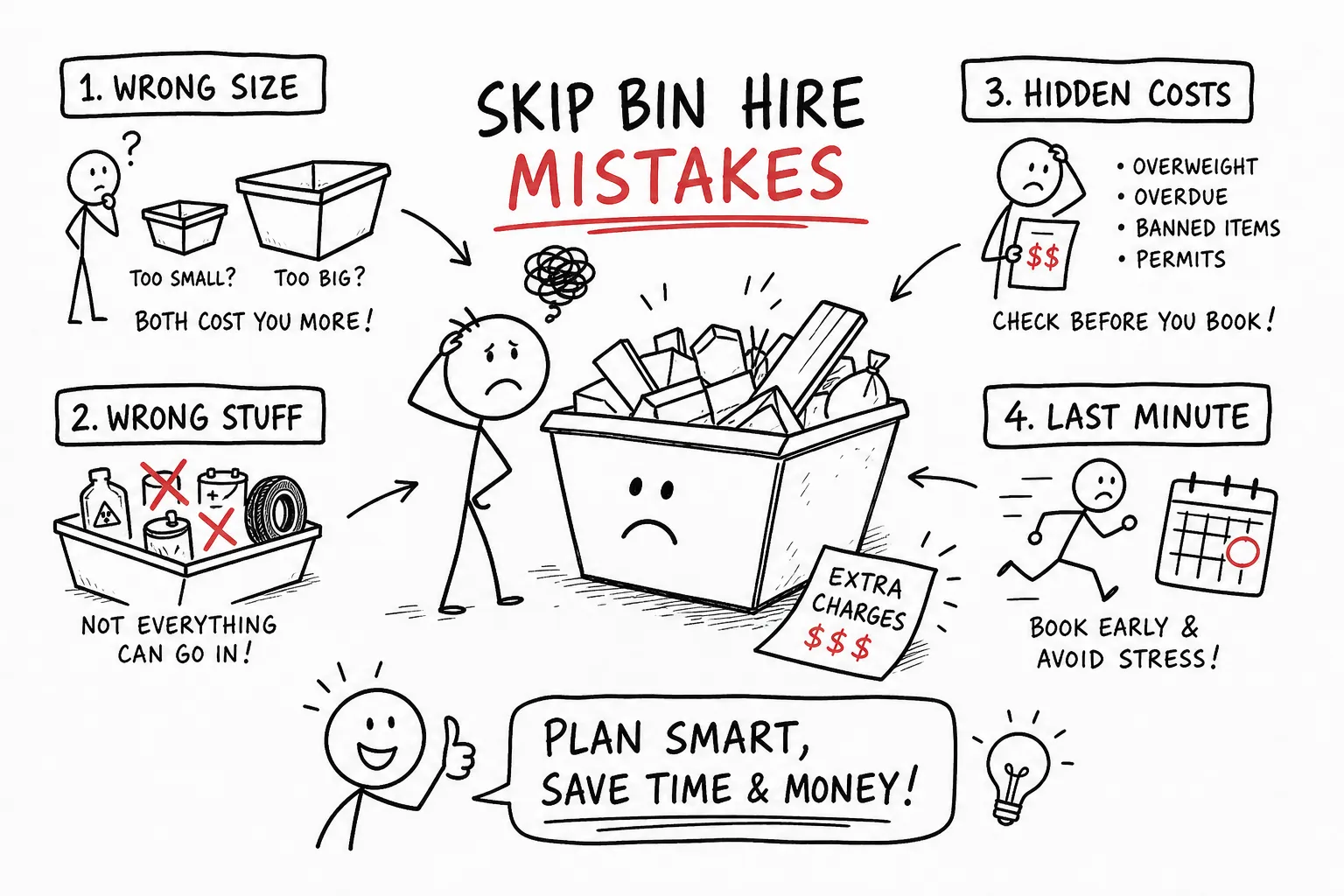
Choosing the wrong bin size is one of the costliest mistakes you can make when you hire a skip bin. Order too small and you’re paying for a second delivery. Order too large and you’ve paid for cubic metres of fresh air. Neither outcome is ideal, and both are avoidable with a quick estimation before you call.
The simplest method: visualise your waste pile and estimate its length, width, and height in metres, then multiply those three numbers together. That gives you a rough volume. Choose the next skip bin size up from that number to account for the reality that waste rarely loads in a perfect, flat stack. Bags, odd-shaped timber, and garden debris all create air gaps that reduce usable capacity.
Why Marrell skip bin sizes matter for common Melbourne jobs
Marrell skip bins are commonly available from 2 m³ through to 12 m³, covering the full range of residential, renovation, and construction jobs across Melbourne. Mapping the right size to the right job saves you money and avoids a second trip. A 2 to 4 m³ bin suits a backyard tidy: garden prunings, soil, light debris, and a few bags of general rubbish fit comfortably. A 6 m³ bin handles a kitchen renovation cleanly, taking cabinets, benchtops, flooring, and all the cardboard packaging without requiring a second collection. For construction and demolition work, an 8 to 12 m³ bin is the practical choice when you’re dealing with rubble, concrete, bricks, and structural timber.
The weight trap people miss
Volume and weight are two different things, and this distinction matters more than most people realise. A general-waste 4 m³ bin typically carries roughly 600 kg before it’s considered overloaded, based on the standard industry allowance of approximately 150 kg per cubic metre. Fill that same bin with soil, bricks, or concrete and you’ll hit the weight limit while the bin still looks half empty. Heavy materials require a heavy-fill bin, not just a larger general-waste bin. When you call to book, be specific about what you’re disposing of. It determines both the bin type and the price you’ll pay.
2. Loading prohibited items and copping the consequences
A contaminated load isn’t just inconvenient; it’s costly. Contamination fees can start at $200 with some operators, and in serious cases a bin gets rejected at the tip entirely, leaving you to arrange alternative disposal at your own expense. Knowing what can’t go in before you start loading protects your budget and avoids a genuinely frustrating delay.
What you can and can’t put in a Melbourne skip bin
The most commonly misunderstood prohibited items include:
- Asbestos and fibro sheeting, these require licensed disposal and can never go into a standard skip
- Liquid waste such as paint, oils, and solvents
- Gas cylinders, aerosols, and pressurised containers
- Batteries and e-waste, including televisions and computers
- Tyres, medical waste, and food scraps
These aren’t obscure edge cases; they show up regularly on Melbourne job sites and in household clean-outs.
What is accepted in a general-waste bin covers the vast majority of renovation and household rubbish: timber, general household items, light construction debris, and bagged rubbish. Note that plasterboard commonly requires separate handling or a dedicated disposal stream, confirm with your provider before assuming it can go in with the general load. Green waste is generally fine too, though it’s worth checking whether a dedicated green-waste bin offers better value for large garden jobs.
Items that attract extra charges rather than a flat ban
Some materials sit in a middle ground. Mattresses, carpet, concrete, soil, large tree trunks, and mixed loads containing heavy inert material aren’t always prohibited, but they frequently attract surcharges or require a different bin type. The safest approach is to disclose anything unusual when you book, rather than discovering an unexpected fee at collection. A quick conversation upfront takes thirty seconds and can save a meaningful amount at the back end.
3. Ignoring Melbourne council permit requirements
This is the mistake that tends to catch people off guard on delivery day. The truck arrives, the bin goes down on the nature strip, and the customer later receives a fine or a notice to move the bin immediately. It’s an avoidable problem with a clear rule: if the bin sits entirely on your private property, you generally don’t need a permit. The moment any part of it touches public land, a nature strip, footpath, road, or parking bay, a council permit is required.
When a permit is actually required in Melbourne
Melbourne’s metropolitan councils each run their own permit processes, with fees and timeframes that vary considerably. Reported 2026 permit fees range from around $63 for a short-term placement in some councils to over $100 per day in the City of Melbourne, check directly with your local council for current rates, as these figures can change. Processing times typically run one to three business days for straightforward applications but can stretch to a week for road placements or sites requiring traffic management documentation. Allow at least five business days and never assume the bin can go on the street without prior approval.
Common placement conditions across Melbourne councils include:
- Maintaining a clear pedestrian path of at least 1.2 m
- Keeping the bin away from intersections, driveways, bus stops, and fire hydrants
- Ensuring the bin doesn’t extend into a traffic lane
- Displaying reflective markings when a bin sits on a carriageway at night
How Twins Bins takes the permit headache off your hands
Navigating council application portals, deciphering local placement conditions, and organising public liability insurance is the part of skip bin hire most people didn’t expect to deal with. Twins Bins aims to assist with the council permit process on your behalf, confirm the specifics of what’s included, such as public liability insurance for bins placed on public land, when you book. You don’t need to log into a council portal or work out which local government area your nature strip belongs to. We sort the paperwork so you can focus on the job itself. Most customers find this is the part of skip hire they didn’t expect to need help with, and the part they’re most relieved to hand off.
4. Accepting a vague quote with no breakdown
A low headline price that grows significantly at pickup is one of the most frustrating experiences in the skip hire market. Delivery fees, disposal levies, excess weight charges, and GST can all be buried beneath an appealing opening number. Before you confirm any booking, whether you’ve found a supplier through word of mouth or searched for skip bin hire near me, make sure you understand exactly what the quote includes.
What Melbourne skip bin prices actually look like in 2026
For standard general-waste bins across metropolitan Melbourne, indicative price ranges in 2026 are approximately:
- 2 m³, $210 to $380
- 4 m³, $400 to $650
- 6 m³, $520 to $950
- 10 m³, $850 to $1,250
These ranges are indicative and reflect factors including waste type, access conditions, hire duration, and applicable disposal levies. A quote at the very bottom of the range deserves scrutiny; at the top end, you should expect clear inclusions. When comparing options, request a detailed skip hire quote rather than a headline figure.
What “all-inclusive” should actually mean
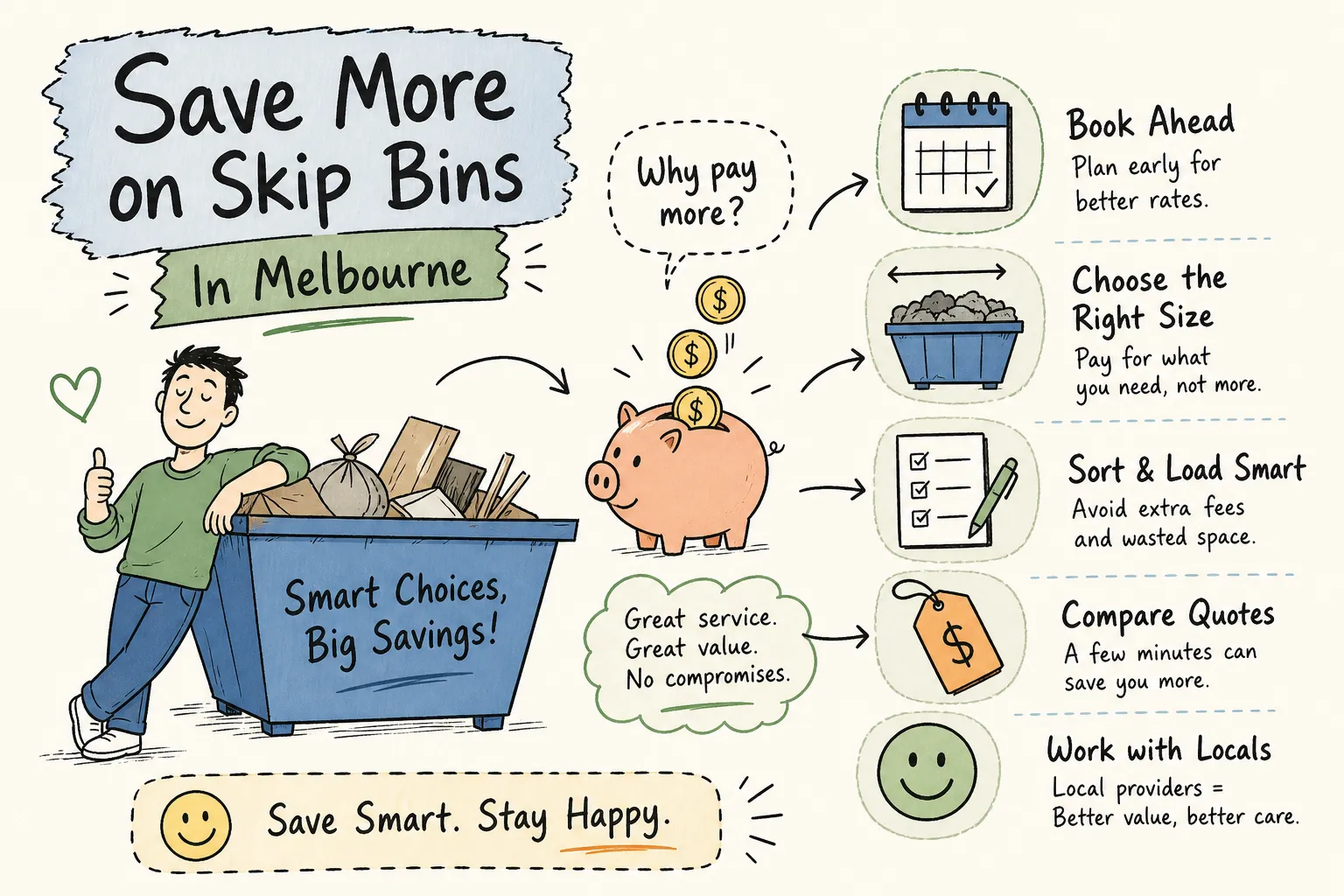
A transparent quote covers delivery, collection, the standard hire period (typically seven days), disposal fees, GST, and permit costs where applicable. If the quote you receive doesn’t specify these items, ask directly: “Is this all-inclusive?” Any reputable supplier will answer without hesitation, if they hedge, take your booking elsewhere. At Twins Bins, we aim to provide transparent, all-inclusive quotes with no hidden costs at the back end. Confirm the inclusions in writing before you commit.
5. Leaving delivery timing and site access until the last minute
A truck that can’t get through your gate, a bin placed in the wrong spot, or a booking made too late to secure the date you need: these are the logistics failures that turn a simple rubbish removal job into a frustrating one. A little preparation before skip bin delivery day prevents all of them.
How far ahead you need to book a skip in Melbourne
For reliable scheduling, book at least 24 hours ahead. Same-day skip bin delivery is sometimes available across metropolitan Melbourne but depends on bin availability and booking cut-off times, so it’s not something to count on for a job with a fixed start date. During busy periods like spring clean season or post-renovation months, two to three days’ notice is a safer buffer. Standard hire runs seven days, and extensions are available if you need more time, arrange them in advance rather than on the day the bin is due for collection.
Preparing your site so the truck can get in and out
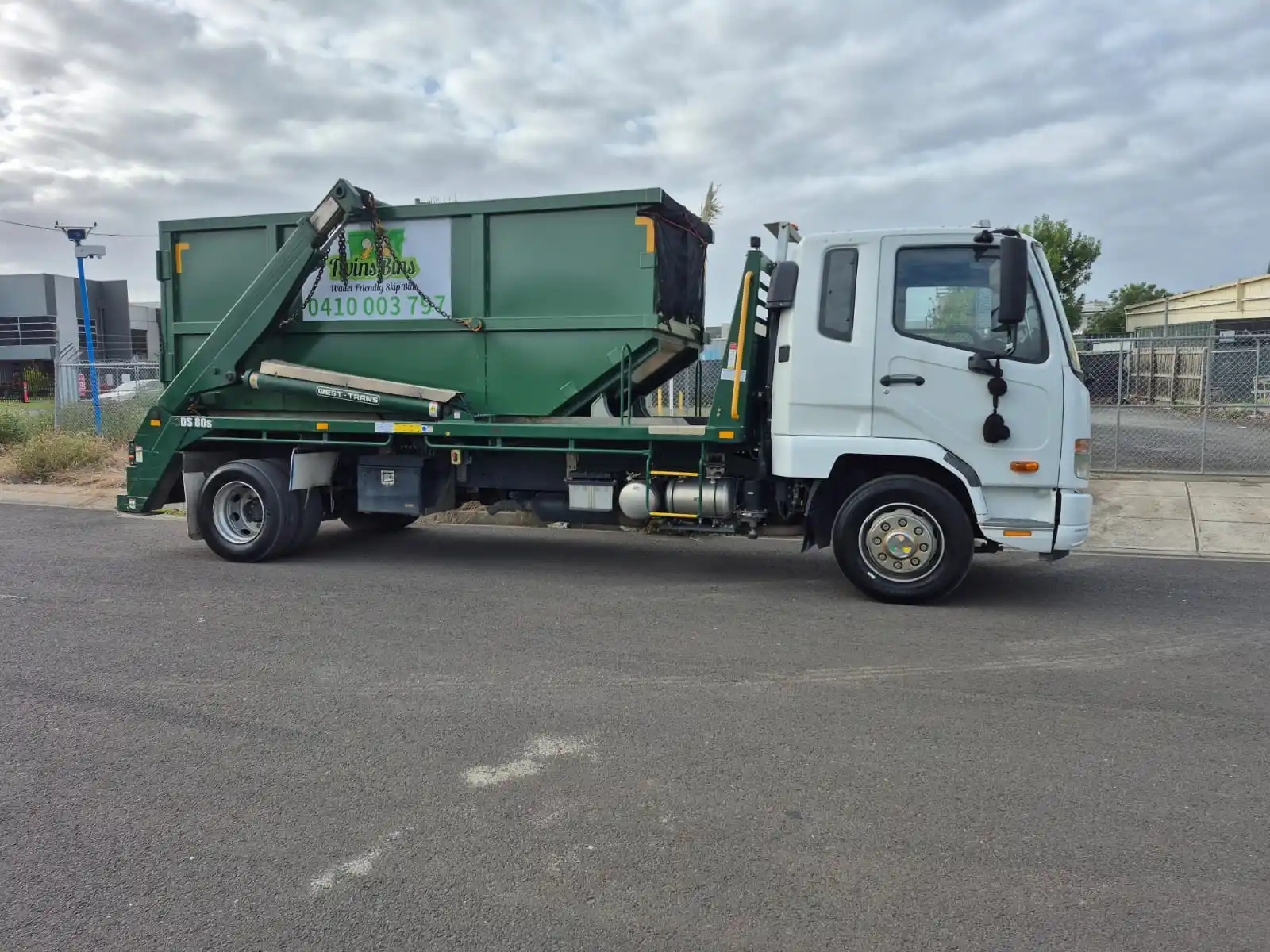
Twins Bins’ drivers need clear access and specific placement instructions before they arrive. Check that overhead clearance is sufficient for the delivery arm, that the surface is solid enough to support the bin’s weight, and that there’s a clear path from the street to the intended placement spot. If there’s any ambiguity about where the bin should sit, resolve it before delivery day. Unclear placement instructions slow the whole process down and can result in the bin being left in a less convenient spot than you intended.
6. Booking blind: a simple checklist before you confirm
Everything above can be summarised into five practical steps that take a few minutes before you pick up the phone or fill in a quote form. Run through this checklist and you’ll arrive at the booking conversation already knowing what you need, whether you’ve searched for skip bin hire near me or come to us directly.
Your pre-booking checklist
- Estimate your waste volumeby multiplying the pile’s length by width by height in metres, then choose the next bin size up to allow for uneven loading.
- Check your waste types against the prohibited items list and flag anything unusual, soil, concrete, plasterboard, mattresses, or chemicals, when you call.
- Confirm whether the bin will sit on private or public landand ask whether a council permit is needed for your specific address.
- Request an all-inclusive skip hire quotethat covers delivery, collection, disposal, the hire period, GST, and any permit fees.
- Confirm your delivery date, site access requirements, and pickup notice periodbefore you hang up.
Get a quote from Twins Bins and book with confidence
Twins Bins is a Melbourne-based skip bin hire business with Marrell bins available from 2 m³ to 12 m³, transparent all-inclusive pricing, and council permit arrangements handled on your behalf. Delivery is subject to bin availability and access conditions, contact the team to confirm lead times for your area. Whether you’re clearing out a single room, finishing a renovation, or managing an ongoing commercial waste stream, there’s a bin size and a straightforward booking process to suit your job.
Get in touch with the Twins Bins team for a no-obligation skip hire quote, or use the online quote form to get a price in minutes. With the right bin size, the right information, and a supplier who handles the details, choosing to hire skip bin services in Melbourne really is as simple as it should be.