Here’s a scenario We’ve seen play out mostly. A Melbourne homeowner books a 4 m³ bin for a bathroom renovation, fills it in two days, calls to ask for an extension, then gets hit with an overfill charge because someone kept loading after the bin was full. On top of all that, it turns out the bin was sitting on the nature strip without a council permit. What started as a simple job ends up costing significantly more than it needed to, with a stressful phone call in the middle of a busy project.
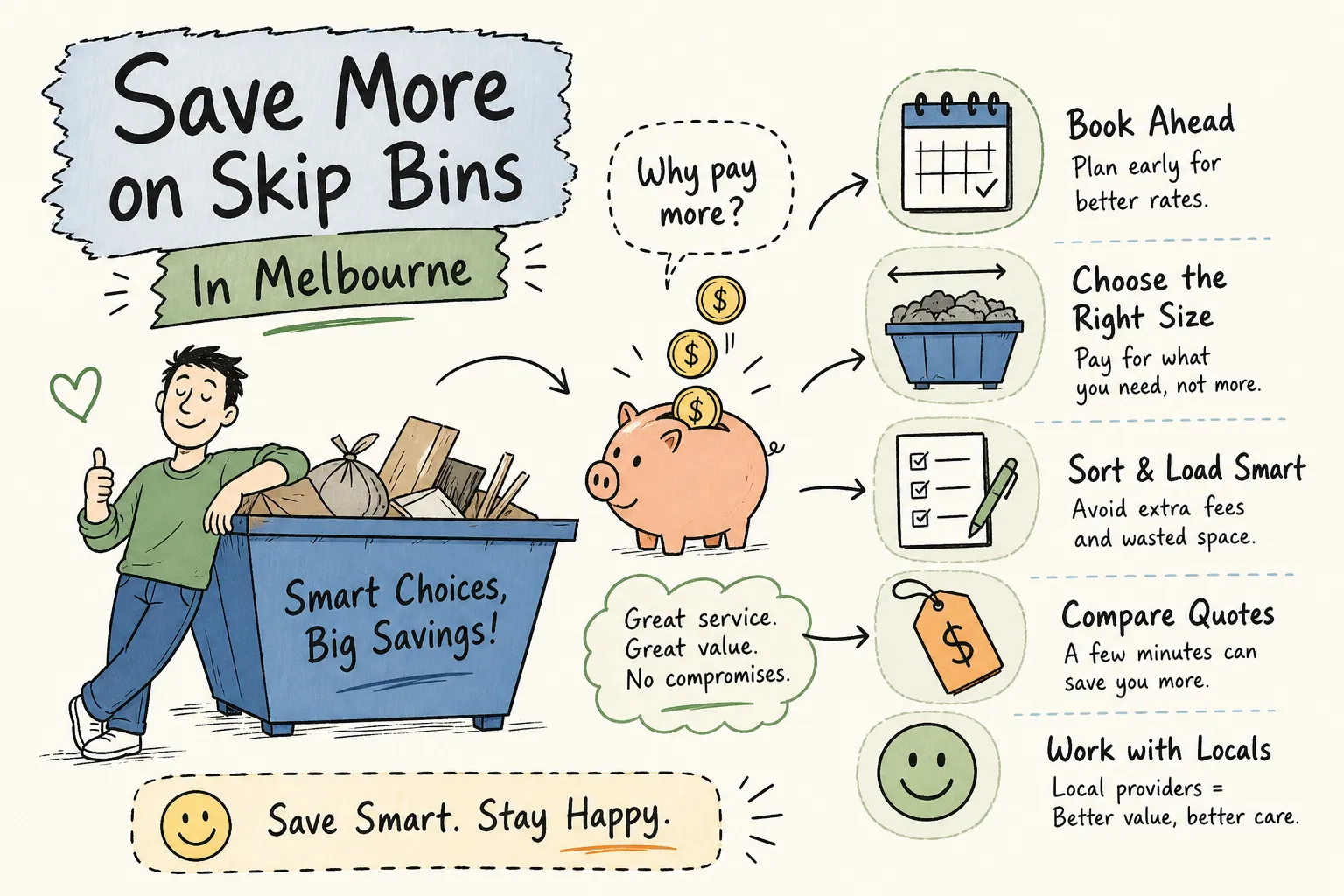
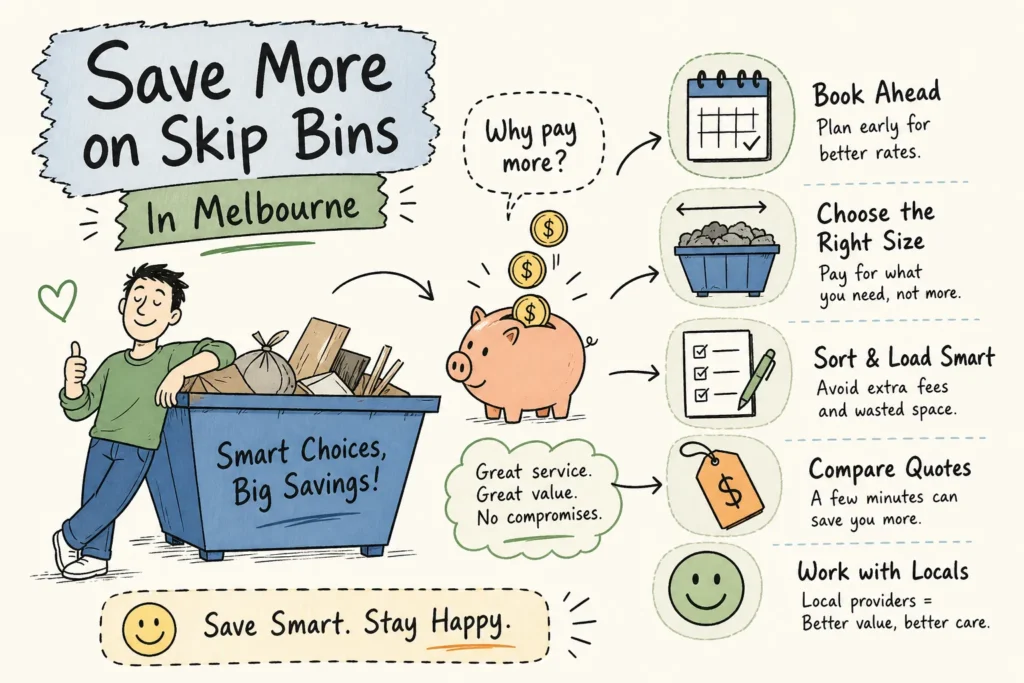
In our experience at Twins Bins, this sequence is entirely avoidable. Almost every extra cost and every headache comes down to a handful of decisions made before the bin even arrives. Get those decisions right and choosing to hire a skip bin in Melbourne is genuinely straightforward. This article covers everything that matters: choosing the right Marrel bin size, what waste is and isn’t accepted, how hire periods and delivery work, when you need a council permit, what to expect to pay, and how to prepare your site before the truck arrives.
Picking the right Marrel skip bin size for your project
This is where most people either underspend and end up needing a second bin, or overbook and pay for space they never use. Choosing the right size from the start is the single biggest lever you have over your total cost when you hire a skip bin, and it takes less than five minutes to get right.
Marrel skip bins are commonly available from around 2 m³ through to 12 m³, and each size maps fairly predictably to specific types of jobs. A 2, 3 m³ bin suits tight-access sites, single-room strip-outs, bathroom tile removal, or a small garage clean-out. Step up to a 4, 6 m³ bin for a full kitchen renovation, multi-room cleanout, shed demolition, or a solid garden overhaul. For larger jobs, whole-house renovations, significant landscaping, or multi-trade construction sites, you’re looking at an 8, 10 m³ bin. The 12 m³ is best reserved for major house clearances, commercial projects, and large-scale demolition sites.
How to estimate the skip bin size you need
A reliable rule of thumb before booking: allow approximately 150 kg of waste per cubic metre for general rubbish. Do a quick mental audit of what you’re throwing out. If you’re on the fence between two sizes, go one size up. A second delivery and pickup almost always costs more than the size difference between bins, and it eats into your project time.
What can and can’t go in a skip bin
Knowing the prohibited items list isn’t just about following rules, it’s about protecting your budget. If a bin arrives at the disposal facility with prohibited materials inside, the load can be rejected entirely, leaving you to deal with removal costs and delays. These situations are frustrating and entirely preventable.
Most residential, renovation, and construction waste is accepted without issue. General household rubbish, timber, bricks, pavers, limited quantities of concrete, garden waste, metal, furniture, and construction debris are all fine. Heavy materials like soil and concrete are worth discussing with your supplier at the time of booking, since some bin types handle them better than others.
Prohibited items that require a separate disposal pathway
The items that can’t go in are the ones that need specialist handling:
- Asbestos:Requires a licensed removalist and an approved disposal facility. No standard skip bin will accept it.
- Chemicals, solvents, wet paint, pool chemicals, fuels:Take these to a council household hazardous waste drop-off or a Detox Your Home event run through the state programme.
- Tyres:Use a dedicated tyre recycler. Most councils have arrangements in place.
- Gas bottles:Return through an exchange or refill programme, or drop off at an approved collection point.
- Batteries and e-waste:Many retailers have collection points, and councils run periodic drop-off events.
- Medical waste and sharps:Pharmacy disposal programmes are the right route here.
A practical shortcut: if an item is hazardous, pressurised, liquid, or infectious, it needs a specialised disposal pathway rather than a skip bin.
How hire periods and skip bin delivery and collection actually work
The standard hire period when you hire a skip bin in Melbourne is 15 days. Some suppliers offer 3-day options for shorter jobs, but 15 days is the baseline most pricing is built around. Extensions are available, but they attract per-day fees depending on bin size. Those fees add up quickly if you’re not organised, so it’s worth booking your bin to arrive on or just before the day your project starts rather than well in advance.
Overfilling is the other common cost trap. Waste must sit at or below the rim of the bin, transport and safety rules commonly prohibit overfilling, and drivers will often refuse collection or charge extra if a load exceeds the rim. That means removing the excess before collection, usually in the middle of a project you thought was finished. Keep the load level at or below the top edge throughout the fill, not just at the end.
On the pickup side, many Melbourne suppliers schedule collection on request rather than on a fixed date. This is actually an advantage: you control when the bin leaves, which means you’re not racing to fill it before a set collection time. When you’re ready, you call or request online, and the bin is collected within the agreed timeframe. Same-day delivery is usually available for urgent jobs, but expect to pay an additional $50, $100 for that service. Standard bookings with a day or two of notice are generally straightforward.
Melbourne council permit rules for skip bin placement
This is the area that catches people off guard most often, particularly in inner Melbourne suburbs where driveways are short and the nature strip is the obvious drop-off point. In Victoria, if a skip bin is going anywhere on public land, including the road, nature strip, verge, or footpath, you need written council approval before the bin is placed. Not after. Before.
If the bin sits entirely within your private property, such as on your driveway or in your backyard, no permit is required. The moment any part of the bin crosses onto council-managed land, you’re in permit territory.
How the permit application process works in Victoria
The process involves identifying the controlling council, submitting an application through the council’s online portal or permit form, providing a site plan showing the bin location, and arranging public liability insurance documentation. Arterial roads and intersections are generally off-limits regardless of permit status. In Port Phillip, for example, the bin must sit within the street frontage of the serviced property, stay clear of footpaths and nature strips, and have flashing yellow lights from sunset to sunrise in certain locations.
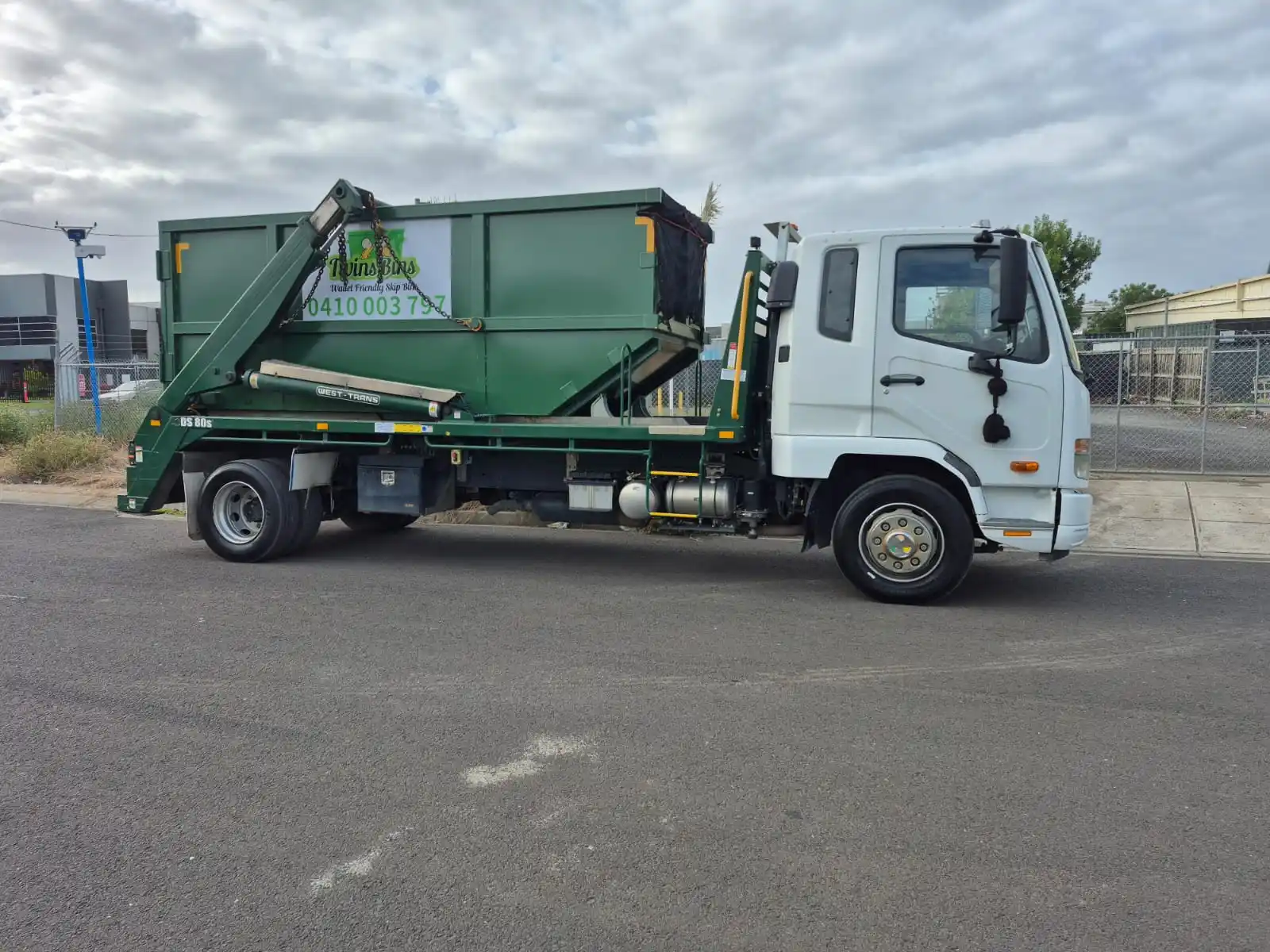
This is one area where using the right local supplier makes a genuine difference. Rather than navigating the council permit process yourself during an already busy project, some suppliers, including Twins Bins, offer to manage the council permit application and arrange the required public liability insurance on your behalf. Confirm this service is included when you book, but for most Melbourne customers it means one less task to coordinate and no risk of the bin being placed without proper approval.
What to expect to pay for skip bin hire in Melbourne
Melbourne skip hire prices are more transparent than most people expect, but the advertised price and the total cost aren’t always the same thing. Knowing what drives the price helps you compare quotes accurately and spot when a low headline number is missing something important.
Bin size is the biggest single cost driver. When you submit a quote request, our team will assess you requirements and provide you most competative price.
Key variables that affect your final price
Beyond size, four factors commonly move the price:
- Waste type:Heavy or mixed waste, soil, concrete, demolition debris, costs more than general rubbish.
- Hire duration:Extensions beyond 7 days attract per-day fees.
- Delivery access:Tight access, long carry distances, or restricted delivery windows can affect pricing.
- Council permit fees:Where applicable, these should appear as a line item in any transparent quote.
When comparing quotes from multiple suppliers, always check what’s included rather than comparing the base price alone. A reputable supplier’s quote should cover delivery, pickup, disposal, GST, and any permit fees as a single clear figure, seek that transparency before committing.
Site preparation that protects your property and your budget
A few minutes of preparation before your bin arrives can prevent property damage, make the driver’s job easier, and ensure you’re getting the full use of every cubic metre you’re paying for. It also reduces the chance of a delivery refusal, which is rare but does happen when access conditions aren’t suitable.
Clear the drop-off area completely before the truck arrives: move vehicles, tools, and any loose objects out of the way. Check for overhead obstructions, powerlines, awnings, tree branches, and garage door tracks, since each can prevent safe bin placement. You’ll also need at least 3 metres of width for truck access and roughly 4 metres of height clearance. If the bin is going on a hard surface like a concrete driveway, placing timber boards under the bin’s legs beforehand will protect pavers and concrete from scuff marks or surface damage.
When it comes to filling the bin, load heavy items flat at the bottom first. Break down bulky items like furniture and timber framing to make better use of vertical space. Compacting as you go means you’ll fit more in without going over the rim, which keeps you clear of overfill charges and ensures the bin can be collected the day you request it without any back-and-forth.
Getting it right from the start saves more than money
The common thread across every unnecessary cost in skip bin hire is a decision made without enough information. The wrong bin size leads to a second delivery or an extension fee. The wrong waste type leads to a rejected load. No council permit leads to a fine or a bin moved at your expense. An unclear quote leads to a surprise invoice. None of these outcomes are inevitable when you hire a skip bin with the right preparation.
Choose the right size for your job, keep prohibited items out, understand how the hire period and pickup process works, and confirm the permit situation before your bin is placed. Read the quote in full, not just the headline number. These steps take minutes and can save you a significant amount in avoidable charges.
If you’re planning a project in Melbourne and want a clear, upfront quote, get in touch with the Twins Bins team. We offer a full range of Marrel skip bin sizes, timely skip bin delivery and collection across Melbourne, and assistance with council permit applications. Reach out for a quote and get your project moving without second-guessing the details.